Vietnamese Street Food: What to Try and How to Order
A sign may have only two words, while the table holds noodles, herbs, dipping sauce and several condiment jars. Ordering lunch does not require memorising Vietnamese cuisine. Start with a few dishes, choose a filling and establish the portion, additions and price.
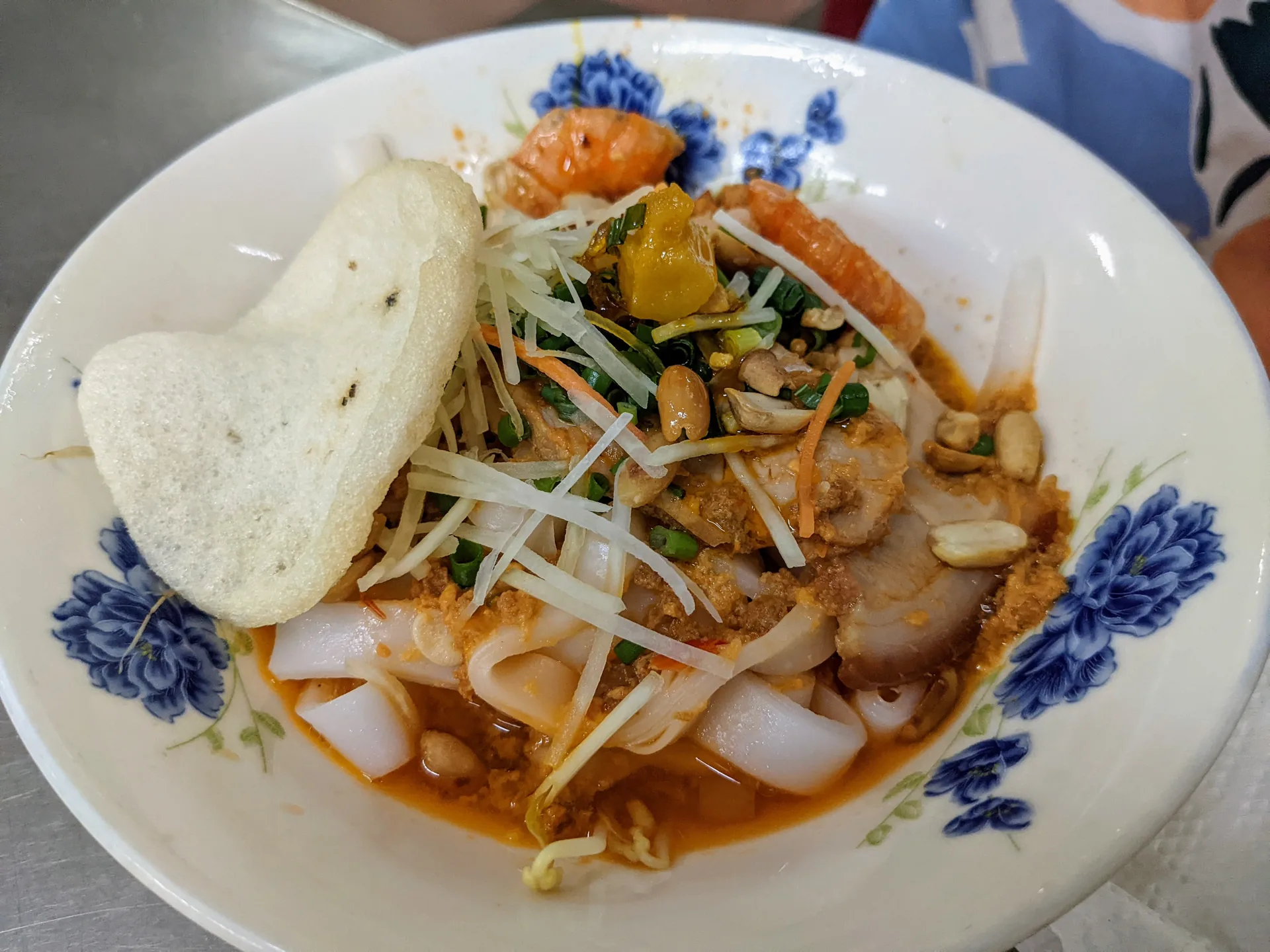
Choose one dish and a clear filling for your first order
For hot soup, start with chicken or beef pho; for a snack, choose a banh mi with a specified filling. In Nha Trang, look for bun ca, nem nuong and banh can to explore local cooking; in Da Nang, try mi quang and banh xeo. Point to the menu name and initially order one portion per person, checking its size. Before preparation, ask for no added chilli and sauce on the side where possible. A dish name does not replace checking ingredients for allergies or dietary restrictions. Establish the price of your chosen version, extras and payment method before ordering. Save the Vietnamese spelling and short phrases below on your phone so you can show them even when unsure of pronunciation.
| Menu name | What you are ordering | Ask about |
|---|---|---|
| Phở bò / phở gà | Rice noodles in broth with beef / chicken. | Meat choice, how it is cooked and additions to a standard bowl. |
| Bánh mì | A filled baguette; meats, eggs and sauces vary. | Filling, pâté, mayonnaise, chilli and sandwich size. |
| Bún cá / bún chả cá | Rice noodles with fish or fish cakes in broth. | Jellyfish, fish products and sauces used. |
| Mì Quảng | Noodles with a little broth and a chosen topping. | Shrimp, meat, eggs, peanuts and cracker ingredients. |
| Bánh xèo | A crisp rice pancake with filling, herbs and dipping sauce. | Filling, pancakes per portion and sauce ingredients. |
| Bánh căn | Small rice-batter cakes cooked in moulds. | Eggs or seafood, number of cakes and sauce ingredients. |
| Nem nướng | Grilled pork, often with ingredients for rice-paper rolls. | Individual or sharing portion, sauce and accompaniments. |
What to try in Nha Trang and Da Nang
Vietnam Tourism describes pho, banh mi and other widespread dishes. The table is a starting point; individual kitchens can change recipes. For a snack, start with one sandwich. For a meal, choose a noodle bowl. Establish portion numbers before ordering a pancake or nem nuong set.
Nha Trang: fish noodles, banh can and nem nuong
Vietnam Tourism’s Nha Trang guide lists bún cá sứa with fish and jellyfish, Khanh Hoa’s nem nuong and banh can with different toppings. A first meal could be fish noodles without unfamiliar additions, if that version is available. Sứa in a name indicates jellyfish: notice it before ordering.
For banh can, ask about toppings and how many cakes are included; a small cake does not establish portion size. With nem nuong, ask whether the meat is ready to eat and how to assemble a roll. Request a demonstration. Do not assume that the pictured set serves exactly one person.
Da Nang: mi quang and banh xeo
Vietnam Tourism describes mi quang with a little broth, greens and crunchy accompaniments, and banh xeo as a pancake you can wrap with herbs. Choose your mi quang topping first. Limited liquid is part of the serving style, rather than necessarily a kitchen mistake.
Ask what comes with banh xeo: pancakes, rice paper, greens and sauce. Do not add every condiment immediately. To understand the flavour, try a small piece without extra chilli, then decide how much sauce to use. Pho and banh mi remain convenient options in both cities when you do not want a larger set.
Ordering: show the dish, quantity and request
Approach the vendor or wait for staff, say hello and point to your menu choice. Specify eating in or takeaway. Indicate portion numbers with your fingers and ask staff to confirm. For two diners, “two of these” should mean two servings, rather than two pieces within a single set.
The Vietnam Tourism phrase guide provides a greeting, a price question and thanks. The Vietnam Tourism street-food guide includes one portion, selecting an item and requesting the bill. The table retains Vietnamese spelling and diacritics. Show the text if pronunciation is uncertain; tones can change meaning.
| Vietnamese text | Meaning | When to use it |
|---|---|---|
| Xin chào | Hello. | At the start of a conversation. |
| Một suất | One serving. | After choosing a dish; establish its size separately. |
| Một cái này | One of these. | Pointing to a sandwich or specific item. |
| Bao nhiêu tiền? | How much does it cost? | Before ordering the selected version. |
| Tính tiền | The bill, please. | When ready to pay. |
| Cảm ơn | Thank you. | After help, ordering or payment. |
| Ăn chay | Vegetarian eating. | Starting an ingredient conversation, not confirming a suitable recipe. |
Use a translation app to show a short request for no chilli, no coriander or sauce on the side before preparation. One request per sentence is clearer than a long list. If communication fails, choose something staff can confidently explain. The local communication guide covers other ways to communicate.
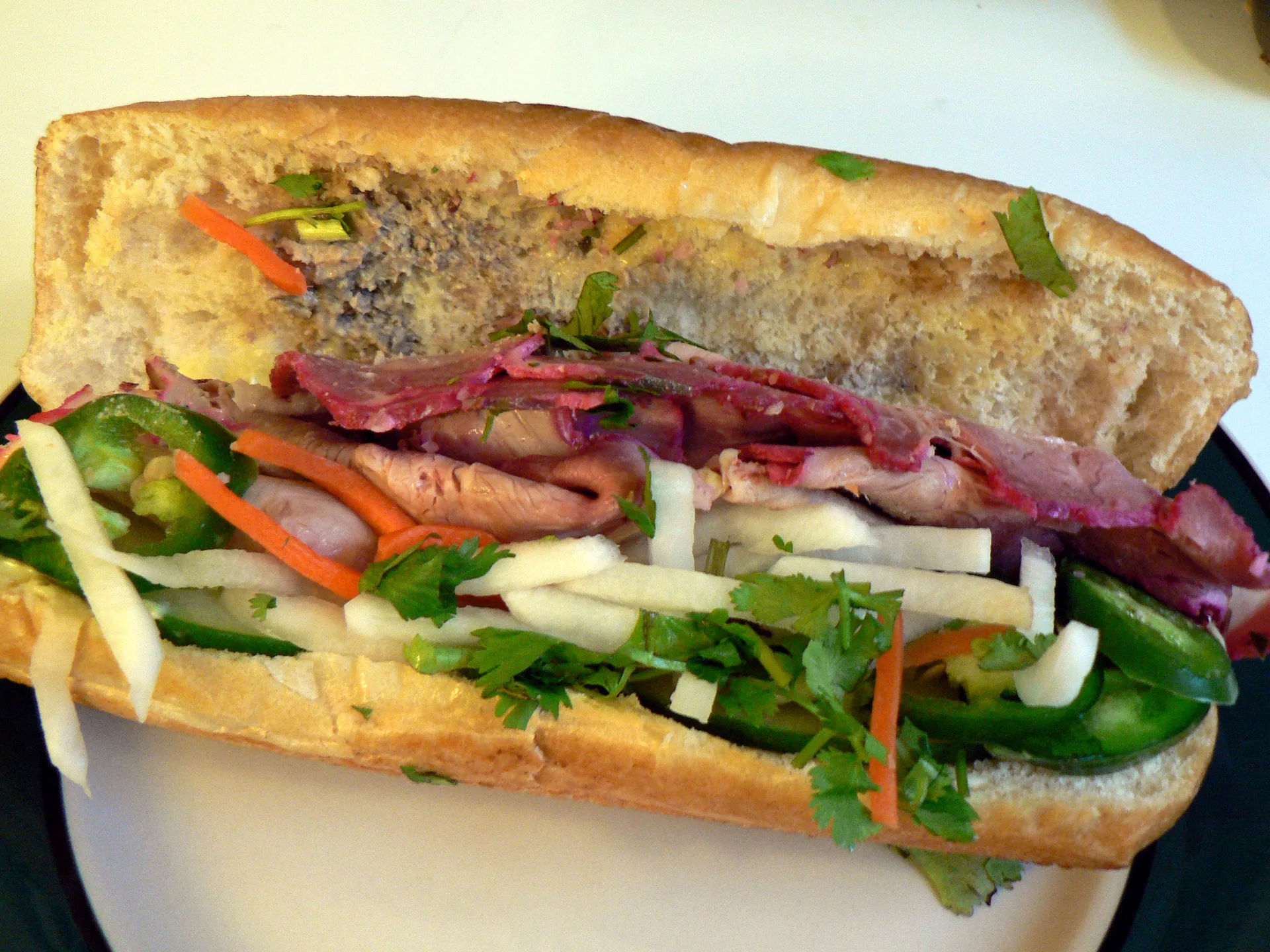
Sauces and heat: establish what is already in the dish
A red jar may contain chilli paste; a clear one may hold fish sauce or a mixture with additions. Do not identify ingredients by colour. Ask which condiment goes with your dish and add small amounts. Requesting no chilli does not remove pepper already present in a prepared broth or marinade.
A banh mi may contain pâté, egg, mayonnaise, vegetables and sauce alongside the chosen meat. Ask to leave out visible additions before assembly. For strict vegetarian eating, ask separately about broth, fish sauce and shrimp paste. Chay helps start the conversation, but the menu and preparation still need discussion.
Prices, portion sizes and payment
The published Bánh Mì Út Thương menu in Nha Trang lists bánh mì thịt chả truyền thống at VND 40,000, bánh mì gà nướng at VND 45,000 and bánh mì bò phô mai at VND 65,000. The last includes cheese in its menu description: price and ingredients change with the filling. These are one seller’s examples, not city-wide street-food averages.
The Mỳ Quảng Bà Mua menu page lists tôm thịt heo nạc with an added egg at VND 60,000 and a special bowl at VND 70,000. The chain has Da Nang and Ho Chi Minh City locations; confirm price and availability at your branch. An online menu does not guarantee identical offers across all outlets.
Two chicken sandwiches at VND 45,000 cost VND 90,000. Add an illustrative VND 40,000 drinks allowance and the total becomes VND 130,000. The sandwich price comes from the linked menu; the drinks amount is an invented budget allowance. Delivery and extras are excluded.
Ask about standard and large servings, and extra egg or meat charges. If the price says 45k, confirm VND 45,000. For seafood, establish whether pricing is per portion, item, 100 grams or kilogram, and the total before cooking. Then ask whether payment is due when ordering or after eating. One stall’s practice need not apply next door.
Bring small banknotes and check your change. If there is a QR code, establish whether the transfer method works for you; the code alone does not mean foreign-card acceptance. In an ordering app, check the total, address and delivery fee. The Vietnam payment guide explains cash, cards and transfers.
Hygiene: a queue is no guarantee
CDC recommends avoiding street-vendor food; if you choose it, select fully cooked, steaming-hot food and avoid raw vegetables. This is a stricter approach than choosing by popularity. Visible cleanliness and a queue provide observations, but do not establish storage conditions or absence of contamination.
Choose a sealed drink, skip ice of unknown water quality and wash your hands before eating. Greens beside a hot bowl remain raw. Guidance may change; discuss individual restrictions with a clinician.
Allergies: tell the kitchen, beyond removing a topping
Peanuts are visible in the mi quang photograph, but no nuts on top does not establish their absence from sauce. Allergies require checking all ingredients and preparation: broth, marinade, sauce, prepared components, shared pans and utensils. Mild, meat-free and no peanuts on top address different requirements.
FARE recommends contacting a restaurant ahead, giving the kitchen a chef card and discussing prevention of allergen cross-contact. Prepare a personalised Vietnamese card with a translator or native speaker who understands the task, listing your particular restrictions. Do not rely on an automatically translated ingredient name or a server’s nod. If ingredients and preparation cannot be confirmed, choose another place. Agree a reaction plan and required medication with your clinician beforehand and carry them with you.
What to confirm for one order
- Dish name, filling and portion numbers.
- Standard or large serving, and pieces in a set.
- Sauces, chilli and other requests before preparation.
- For allergies: all ingredients and prevention of allergen cross-contact.
- Version price, extras, drinks and seafood pricing unit.
- Eat-in or takeaway, when to pay and a usable payment method.
Need help with an everyday question in Vietnam?
Describe your city and the particular situation you encountered after arriving. Use the form to send a question for a consultation on practical next steps.