Intercity Travel in Vietnam: Bus, Train, Flight, or Car
Distances in Vietnam are deceptive: a nearby city on the map can mean half a day on the road, a mountain pass, rain delays, holiday crowds, luggage problems, or a pickup point far from your hotel. The right transport starts with the route, not with “I always take the bus” or “I always fly”.
Short answer: choose the option that matches the job
Flights are best for long legs and tight schedules, trains for calmer overnight routes and luggage, buses or limousine vans for budget and medium-distance routes, and a car with driver for families, difficult addresses, stops, and routes such as Da Nang - Hoi An, Da Nang - Hue, or Nha Trang - Da Lat.
How to choose by route
These are not fixed schedules or guaranteed prices. They are practical decision patterns: final departures, travel time, luggage, and fare need to be checked with the operator or app when you book.
Nha Trang - Ho Chi Minh City
If speed matters, check flights from Cam Ranh airport: the flight is short, but add airport transfer, baggage, check-in, and delay risk. Train works if you want to board in the evening and arrive in the morning without airport logistics; choose soft sleeper or soft seat depending on timing. Sleeper bus is cheaper but harder for sleep, tall passengers, motion sickness, and night stops. A car with driver on this leg usually makes sense only for a group, heavy luggage, or stops on the way.
Nha Trang - Da Lat
This is not just a short line on the map; it is a mountain road with bends and elevation change. For one passenger, bus or limousine van is often enough. For family, motion sickness, heavy luggage, late departure, or scenic stops, a car with driver is better. Self-riding a motorbike only makes sense for experienced riders with documents, insurance, and a daytime route.
Nha Trang - Da Nang / Hue / Hoi An
This is a long leg: flight saves a day, train gives a calmer overnight option, bus can be cheaper but often more tiring. For Hoi An, remember that the old town has no main railway station: most people travel to Da Nang first, then take a car, shuttle, or taxi. If the trip includes Hue, Da Nang, and Hoi An, plan it as one regional route with short transfers instead of backtracking.
Da Nang - Hoi An
For most travelers, this is a car, shuttle, or pre-arranged transfer route. Train does not solve it because Hoi An is not on the main railway line. Bus or shared shuttle can be cheaper, but with luggage, late arrival, children, or accommodation down a lane, private car is simpler.
Da Nang - Hue
The choice depends on the goal. Train is attractive for coastal scenery and parts near Hai Van, a car gives more timing control and can use the tunnel or scenic route, and bus is cheaper but less flexible. The Russian-language VietnamSpot Hai Van and Da Nang-Hue transport guide guide explains the practical split well: train for views, car for timing and stops.
Hanoi - Da Nang / Hue / Nha Trang / Ho Chi Minh City
On long north-south routes, do not compare only ticket price. Vietnam.travel transport within Vietnam notes that Hanoi - Ho Chi Minh City trains can take up to 30 hours, and from Central Vietnam to either end 16 hours is common. If your trip is short, flying often saves a day; if the journey itself is part of the experience, train can be the right choice.
Strengths and limits of each option
Good decisions compare sleep, luggage, delay risk, departure point, arrival time, and how easy it is to recover from a mistake, not just cheap versus expensive.
Flight
Vietnam.travel transport within Vietnam calls flying the most convenient option for seeing several destinations when time is short and notes daily flights to top destinations. Check Vietnam Airlines, Vietjet, and the real schedule for your date: some routes are seasonal, frequency can change, and baggage or seat fees can change the final price. Vietnam Airlines official website is useful for Vietnam Airlines baggage, online check-in, and fare conditions, while Vietjet official website is where to verify low-cost fares and add-ons directly.
Train
Vietnam.travel transport within Vietnam describes trains as a relaxed way to cross the country and gives useful reference points: average speed around 40 km/h, soft seats and four-berth sleeper cabins, and tickets available at stations, agencies, and the official online ticketing site. Vietnam Railways online ticketing website provides ticket search, booking information, refund information, and notes that passenger details must match identification. For overnight trains, choose berth, carriage type, air conditioning, toilets, food, and arrival time deliberately.
Bus and sleeper bus
Vietnam.travel transport within Vietnam says open-tour buses are popular with budget travelers, especially in southern and central Vietnam, and run between Hanoi, Hue, Hoi An, Nha Trang, Da Lat, Mui Ne, and Ho Chi Minh City. But sleeper bus comfort is not universal: beds can be short, air conditioning strong, night stops abrupt, and motion sickness real on mountain roads. Check FUTA Bus Lines official website for Futa/Phuong Trang routes and Vexere booking platform as an aggregator for buses, trains, and flights when comparing operators.
Limousine van
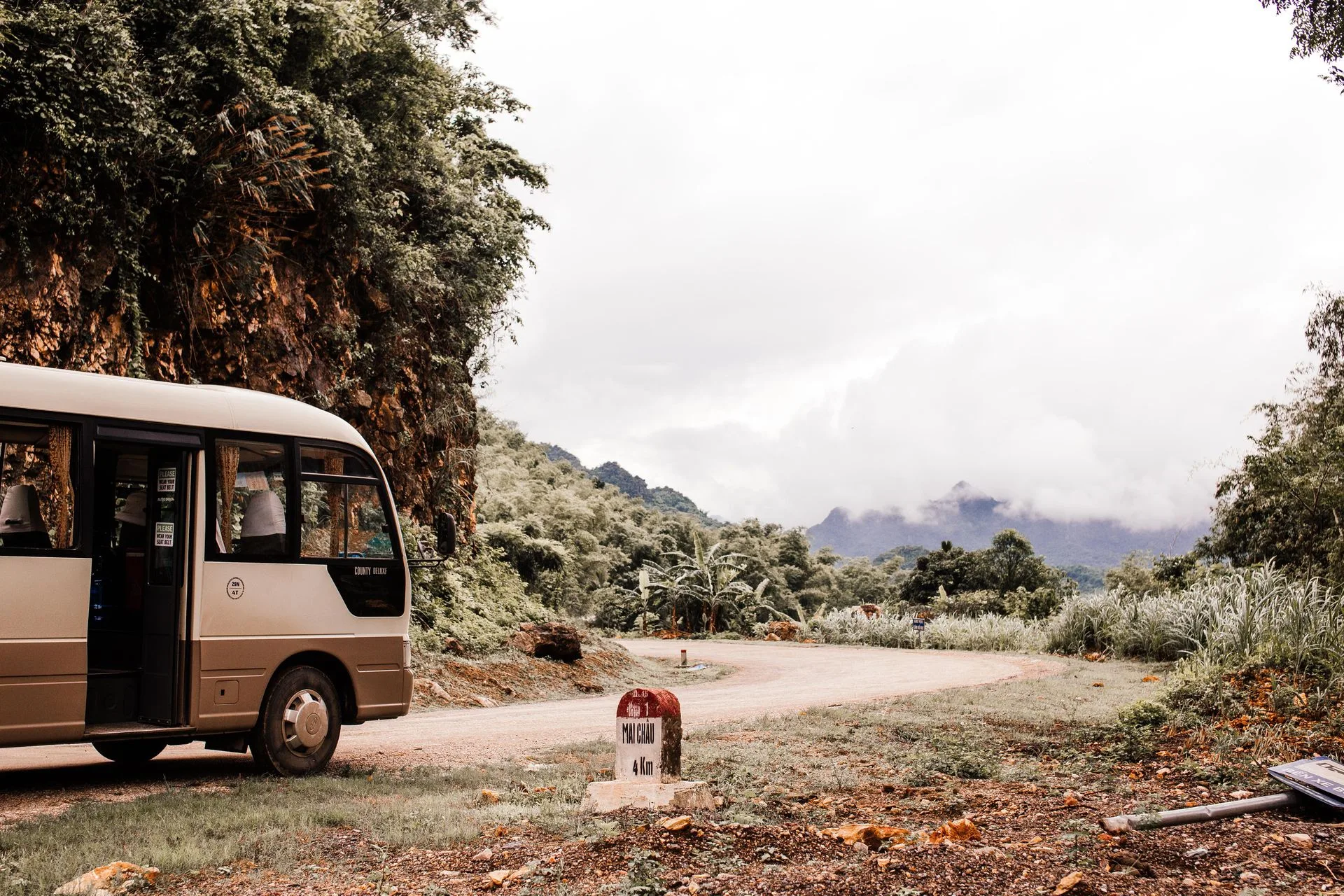
In Vietnam, limousine van usually means a minivan with fewer seats and more comfortable recliners, but quality depends on the operator. It can work well for medium routes such as Da Nang - Hoi An, Da Nang - Hue, Nha Trang - Da Lat, or Ho Chi Minh City - Mui Ne if pickup is close to your hotel. Before paying, confirm pickup point, luggage size, number of stops, seat belts, drop-off point, and time-change rules.
Car with driver
A car with driver costs more, but solves problems a ticket cannot solve: door pickup, exact address, waiting time, viewpoints, suitcase space, route changes, and transport after arrival. It matters most for families, late hours, medical trips, moving with belongings, accommodation outside the center, and routes where the bus drops you “somewhere nearby”.
How to book with fewer surprises
Find the pickup and drop-off point before you find the ticket. In Vietnam, “Da Nang”, “Nha Trang”, or “Ho Chi Minh City” can mean airport, railway station, old bus station, new terminal, operator office, or hotel pickup. A wrong departure point can cost more than the difference between bus and car.
Compare at least two channels: the operator’s official website and an aggregator. For trains start with Vietnam Railways online ticketing website, for flights use airline websites, and for buses compare an operator such as FUTA Bus Lines official website with an aggregator such as Vexere booking platform. If booking through chat or a local agent, ask for a ticket screenshot, pickup address, route or bus number, luggage rules, and contacts.
For overnight trains and buses, avoid arriving at 3-5 a.m. with no plan. Check whether reception is open, whether you can leave luggage, whether transport is available from the station, and whether waiting outside is sensible. A later but cleaner arrival can be better than saving one hotel night.
Luggage, children, animals, and sports equipment
Large suitcase, stroller, board, bicycle, kite, child seat, or animal changes the choice immediately. Flight means baggage rules and fees, train means storage space and carriage comfort, bus means confirming luggage acceptance, and car means trunk size.
For families with children, fewer transfers often matter more than the cheapest ticket: door-to-door car, train at a reasonable arrival time, or direct flight. Two transfers with suitcases and a tired child can erase the saving.
For a medical trip, clinic visit, or travel after treatment, avoid sleeper buses and self-driving. A reserved train seat or berth, car with driver, or short flight with time buffer is usually better.
Holidays, weather, and seasonality
During Tet, long weekends, school holidays, and major events, good seats disappear earlier and pricing or cancellations become less predictable. Vietnam.travel transport within Vietnam recommends buying train tickets a few days ahead on normal days and well in advance during Vietnamese holidays and peak times; for buses it mentions one or two days ahead, and around two weeks during holidays.
Weather matters most in central Vietnam, mountain roads, and islands. Rain can slow a car, make mountain roads unpleasant, raise taxi demand, and ruin an overnight bus plan. For Da Nang, Hue, Hoi An, Da Lat, and Nha Trang, keep a buffer if a flight or important appointment follows.
If the route ends with an international flight, do not put a bus or train right before it. Intercity road delays, rain, crashes, late departure, or terminal confusion can turn a small saving into a missed ticket.
Road safety
UK Vietnam safety and security advice recommends pre-arranged transport or official taxi hailing apps and warns separately about road and motorbike risks. Smartraveller Vietnam travel advice lists crowded streets, poor road maintenance, and drivers ignoring road rules as road hazards. For intercity travel, that means choosing operator, seat belts, daytime routes, and roads consciously, not only by price.
If a bus looks overloaded, the driver is rushing, seat belts do not work, boarding is chaotic, or you are offered a place in the aisle, refuse it. In a limousine van, check the seat belt and do not travel without a proper seat.
For a car with driver, agree that the driver will not speed, will stop when needed, will not take unnecessary night mountain roads, and will not change car or driver without warning.
What to confirm before paying
- Where exactly are pickup and drop-off: station, office, hotel, airport, or bus terminal?
- How long is the whole trip including terminal transfer, check-in, waiting, and transport after arrival?
- What are luggage rules, fees, and suitcase size limits?
- Can you choose seat, berth, carriage class, or vehicle type?
- What happens if the flight is delayed, bus is cancelled, train is late, or departure time changes?
- Are there seat belts, air conditioning, toilet, rest stops, and enough space for a tall passenger?
- Where will you be after arrival, and is transport to your accommodation available?
- Are you arriving at night without reception, mobile data, or a clear plan?
- Is there a buffer before an international flight, check-in, doctor, or tour?
- For a group, is a car with driver cheaper once luggage, stops, and door-to-door transfer are counted?
Red flags
- The ticket is cheap, but pickup is far from your accommodation or airport.
- The route is overnight, mountainous, or long, but the operator does not show seat and vehicle type.
- You are promised hotel pickup without address, time, or driver contact.
- The aggregator shows one price, but chat adds luggage, parking, tolls, and extra fees.
- Arrival is at night and accommodation cannot confirm early check-in or luggage storage.
- An intercity bus or car is scheduled too close to an international flight.
Need help choosing an intercity route?
Share the cities, date, luggage, passengers, budget, and whether speed, comfort, or price matters most. We can help compare flight, train, bus, limousine van, and car with driver.