Groceries and Everyday Shopping in Vietnam
In Vietnam, groceries are rarely solved by one “main supermarket”. A comfortable routine usually mixes several places: wet market for fruit and greens, large supermarket for a basic shop, minimart near home for water and small items, import shops for specific products, and delivery for heavy goods.
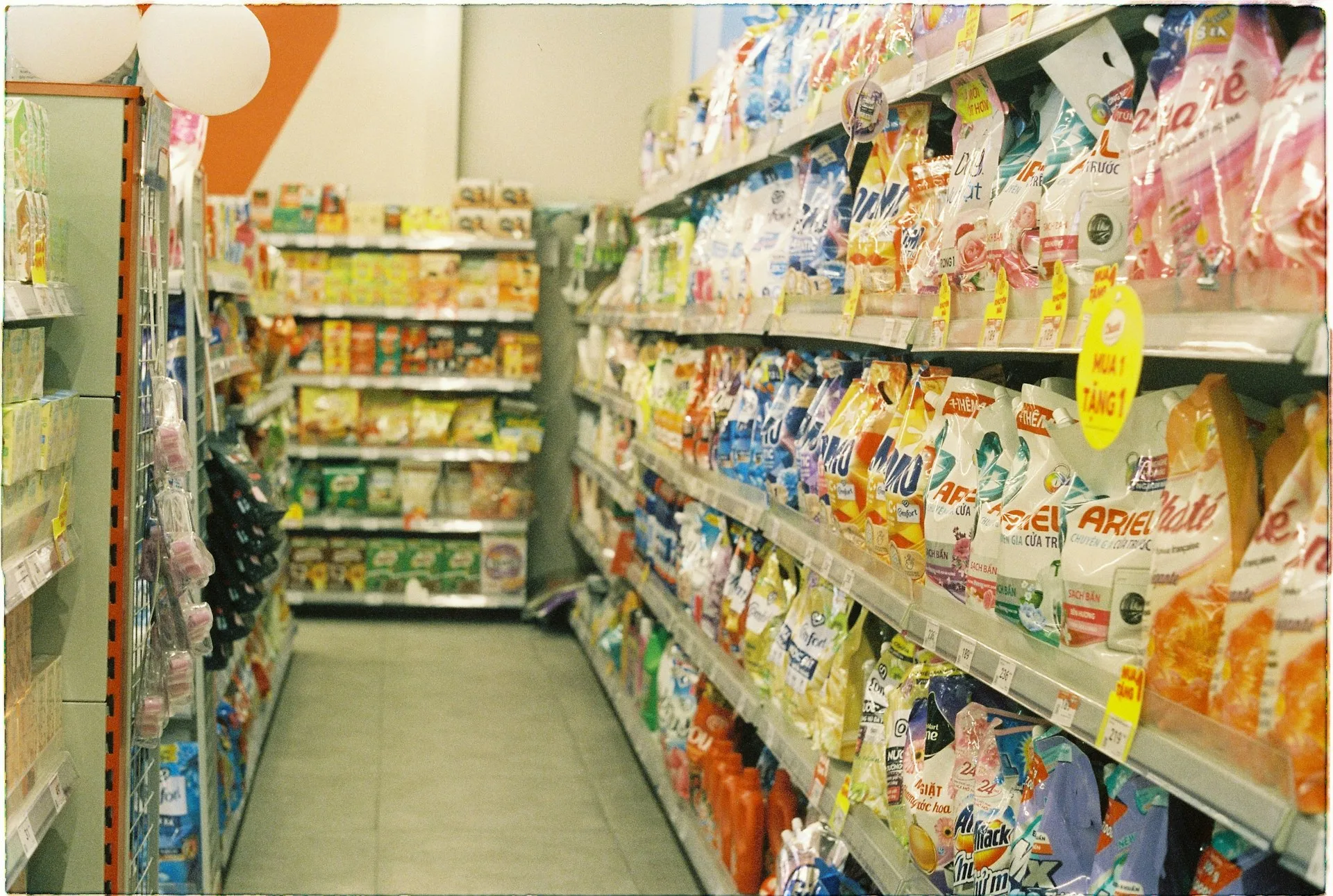
Short answer: do not search for one shop for everything
For the first days, buy water, coffee, rice, eggs, yogurt, household cleaner, tissues, trash bags, and basic kitchen items in a large supermarket. Then build your routine: fresh products at the morning market, heavy goods by delivery, imported items selectively, and small purchases at WinMart+, Circle K, FamilyMart, 7-Eleven, or a local shop near home.
Shopping formats you will see
Large supermarkets and hypermarkets are best for the first big shop: groceries, water, coffee, snacks, child products, household cleaner, dishes, towels, containers, light bulbs, extension cords, and simple appliances. In major cities, look for Lotte Mart, GO! / Big C, Co.opmart, WinMart, MM Mega Market, AEON, and local shopping centers.
Vietnam Airlines supermarket guide lists major chains such as WinMart, GO!, Co.opmart, Lotte Mart, and MM Mega Market as common grocery options in Vietnam. That does not mean they are always cheapest, but for foreigners they offer the important basics: price labels, receipts, fixed checkout, and fewer language surprises.
Minimarts and convenience stores are useful for water, drinks, noodles, milk, yogurt, SIM top-up, snacks, and late-night purchases, but a full basket there is usually more expensive. Wet markets are better for fresh goods, while specialist stores are for imported cheese, grains, spices, gluten-free items, Indian groceries, Korean sauces, or familiar cosmetics.
Supermarkets: WinMart, Lotte Mart, GO!, Co.opmart, and MM Mega Market
WinMart official information is useful for everyday groceries and WinMart+ points near home; larger stores cover more categories, smaller ones cover quick essentials. If you have just arrived, search Google Maps for WinMart or WinMart+, not only the old VinMart name that still appears in conversations and older guides.
Co.opmart works as a classic Vietnamese supermarket: groceries, household products, local brands, promotions, prepared food, and sometimes delivery through partner channels. Check GO! / Big C through GO! Vietnam store finder: this format usually has large stores, food courts, household goods, and parking, but the exact setup depends on city.
MM Mega Market branches is closer to a stock-up shop: bulk packs, water, household cleaner, meat, vegetables, home goods, and sometimes good prices on larger quantities. Lotte Mart is often comfortable for foreigners and families: groceries, Korean goods, food court, cosmetics, daily items, parking, and easier navigation. The best option depends on district, not brand.
Wet markets: good value, but check the basics
Wet markets are good for fruit, herbs, vegetables, fresh fish, meat, eggs, flowers, spices, dried fruit, and some household items. But a market is not automatically cheaper for a foreigner: if you do not know the price per kg, season, quality, and normal look of the product, the final price can beat a supermarket.
Ask price per kg or per item before choosing, do not hand over a large note before final weight, check change, and compare neighboring stalls. For seafood and meat, smell, ice, turnover, and shopping time matter: morning choice is better; evening may allow bargaining, but quality can vary.
A useful adjustment is not shopping “like at home” only in supermarkets. In Vietnam, fresh herbs, mango, dragon fruit, lime, bananas, eggs, and fish can be more logical at markets, while milk, yogurt, coffee, oats, child products, and household cleaner are easier in shops with receipts.
Nha Trang: building a local basket
In Nha Trang, a simple starter setup is Lotte Mart or a large supermarket for the first shop, WinMart/WinMart+ and local stores for small items, markets for fruit and fresh goods, and Russian-speaking chats for rare imported products or tested locations. VietnamSpot Nha Trang shopping guide is useful for orientation around markets, shopping centers, WinMart, and Lotte Mart; still check current prices on site.
If you live in the center or near the beach, do not judge the area only by the nearest “supermarket” on the map. Walk it: where to buy large water bottles, decent household cleaner, meat/fish, ATM access, card or QR payment, and whether heavy items can be delivered.
For families or longer stays, one large trip by Grab or driver can be worth it: pot, containers, detergent, shampoo, towels, hangers, water, grains, and basic stock. Then daily purchases can stay near home without carrying heavy bags in the heat.
Da Nang and Hoi An: district matters more than brand
In Da Nang, choice depends on district. An Thuong and My Khe have many small shops, cafes, import shelves, and delivery options, but for a large shop Lotte Mart, GO!, MM Mega Market, Co.opmart, or a larger WinMart can be easier. Da Nang Love supermarket guide and Hoi An Da Nang supermarket guide are useful local maps of store formats when choosing an area.
If you live near Han River, Hai Chau, or Son Tra, check more than distance: crossings, parking, heat, rain, Grab during peak time, and delivery. In Da Nang, “10 minutes on the map” with heavy bags can be worse than one weekly large order.
Hoi An has fewer large supermarkets, so many people stock up in Da Nang before moving or rely on delivery. For a short stay this is fine, but for a month you should know where to buy meat, dairy, coffee, household cleaner, child products, and basic medicine.
Delivery for groceries and heavy items
Delivery is useful for water, drinks, rice, detergent, diapers, bulk packs, and repeat purchases. But not every service works equally well in every city and district. Check minimum order, delivery time, substitutions, payment, refund, Vietnamese address, and courier communication.
Co.opmart mentions online and partner channels such as cooponline.vn, GrabMart, ShopeeFood, and Zalo OA. In practice grocery delivery can go through a store app, GrabMart, ShopeeFood, Zalo, a shop Facebook page, Telegram/WhatsApp from a small supplier, or a normal courier arranged by the seller.
For your first delivery, do not start with a large fresh-meat, fish, and dairy basket from an unknown seller. Start with water, household products, and dry goods; test timing, packaging, communication, and substitution. For perishables, first learn the specific shop.
Imported goods and why familiar brands cost more
If you shop in Vietnam exactly like in Europe, Russia, Kazakhstan, or the U.S., the budget climbs quickly: cheese, cold cuts, berries, imported milk, cereal, chocolate, wine, pet food, cosmetics, and familiar household brands can be much more expensive. This is not always overcharging; often it is import, logistics, and smaller demand.
Saving money means splitting the basket: buy local vegetables, fruit, rice, noodles, eggs, fish, herbs, and coffee locally; keep imports for items where brand or ingredients really matter. For allergies, child food, diet, sports nutrition, and pet care, make a must-have list and check city availability before moving.
Foreign residents often use extra channels: Telegram groups, Facebook groups, small import shops, Korean/Indian/Japanese stores, and delivery sellers. These can be useful, but receipts, expiry dates, storage, and seller reputation still matter.
Price labels, receipts, and payment
Mistakes often come from units: price per kg, per 100 g, per pack, per item, bundle, buy-one-get-one, loyalty-card promo, or a discount that applies to a different flavor or size. At checkout, check the receipt, especially when the item stood near a yellow promotion label.
Check expiry date, packaging, fridge temperature, smell of meat/fish, fruit condition, seals on cosmetics and household cleaner. In small shops and tourist areas, checking dates is normal: hot climate and slower turnover make it a daily habit.
Payment: keep VND cash for wet markets and small shops, card for chain supermarkets, QR/bank transfer if you have a local account or trusted payment route. If paying with a foreign card, check transaction currency and your bank’s fee.
First household shop after moving in
After moving in, do not buy everything for a month on the first evening. First check what the apartment already has: drinking water or filter, pot, pan, knife, cutting board, glasses, bedding, towels, bucket, mop, sponges, dish soap, trash bags, toilet paper, extension cord, and stable Wi-Fi.
Good first list: water, coffee/tea, eggs, yogurt, bread or rice, fruit, simple herbs, dish soap, sponges, toilet paper, trash bags, detergent, sanitizer, tissues, hangers, containers, and basic spices. Buy the rest after 2-3 days of actually living there.
For rental apartments, do not buy large appliances and expensive household goods before understanding lease length and move-out terms. Sometimes it is cheaper to ask the landlord for a kettle, microwave, mattress, work desk, or router than to buy and move it later.
Tet, holidays, rain, and other stock-up moments
Before Tet and major holidays, some markets, small shops, delivery services, repair workers, and local providers can run irregularly. Large chains often reopen sooner, but assortment, queues, and delivery can differ. If you live in Vietnam during this period, stock water, basic food, medicine, child products, pet food, and household cleaner.
During rainy and storm periods in central Vietnam, do not keep an empty fridge and one bottle of water at home. For Da Nang, Hoi An, and Hue, it is reasonable to have water, dry food, power bank, flashlight, medicine, and delivery/taxi contacts.
For Nha Trang and resort areas, the separate risk is late arrival, long transfer from Cam Ranh, and check-in after normal shops close. For the first night, keep water, snack, VND cash, and the nearest late-night shop address.
Quick shopping checklist
- You have 1 large supermarket, 1 wet market, 1 nearby shop, and 1 delivery option on the map.
- You know where to buy water, household cleaner, fresh goods, dairy, and imports.
- At markets, you ask price per kg or per item before buying.
- In shops, you check expiry date, receipt, promo label, and unit.
- Heavy goods have delivery or transport, not a hot walk with bags.
- You keep VND cash for markets and small purchases.
- For the apartment, you buy needed basics, not a full “just in case” set.
- Before Tet, heavy rain, or late arrival, you have water, food, and medicine.
Red flags
- Price label is near the product but for another size, flavor, or pack.
- Market seller will not quote price per kg before weighing.
- Fresh goods are warm, smell sharp, or packaging is swollen.
- Discount works only with store card, and checkout charges full price.
- Delivery does not confirm substitutions and final amount before payment.
- Imported item is far below market price but has no expiry date or damaged packaging.
- You buy a large appliance for a rental before agreeing with the landlord.
Need to set up daily life quickly after arrival?
We can help map your first local shopping route: where to buy groceries, water, household basics, what to order by delivery, what to ask the landlord for, and how to avoid overpaying for the first shop.