Moving to Vietnam With a Cat or Dog: Flights and Housing
A flight with a pet starts before buying the ticket. You need to coordinate export from the departure country, entry into Vietnam and carriage on every flight. Airline approval settles only one of those tasks. Even a light cat can be refused cabin travel if the carrier is unsuitable or the quota is full. After landing, you need a vehicle that fits the crate and accommodation with confirmed permission for your animal. Here is how to put those decisions into one workable itinerary without leaving the hardest questions until departure day.
Start with your pet’s details and the complete itinerary
Record species, breed, age, the animal’s weight and combined carrier weight, identification number, vaccinations and health considerations. Add the departure country, every airport, flight number and operating airline. One booking reference can include several airlines; the first carrier’s approval does not establish acceptance on the next leg. Before paying a non-refundable fare, ask about pet availability and how the service is confirmed. Add a separate pet task list to your moving preparation guide: its deadlines may determine your moving date.
| Stage | Who to ask | The answer you need |
|---|---|---|
| Export | The departure country’s competent veterinary authority | Certificate form, identification, vaccinations, issuance and deadlines |
| Entry into Vietnam | Animal quarantine authority at the arrival airport | Import category, declaration, documents and inspection arrangements |
| Flights and connection | Every operating airline; transit authority where relevant | Confirmed carriage and pet handover and collection arrangements |
| Accommodation | Property owner and building management | Written acceptance of this specific animal and payment conditions |
Documents follow the departure country, not the owner’s nationality
A Russian citizen living in Thailand and flying from Bangkok follows the departure country’s export procedure. A Russian checklist cannot replace Thai documentation. For a multi-country itinerary, build a calendar: which steps depend on vaccination or identification, when an examination is available and when an endorsed certificate is needed. A vaccination booklet should not automatically be treated as an international export authorisation.
Departing from Russia
Start with the government veterinary service and territorial Rosselkhoznadzor office. Specify Vietnam and every connection; ask which export certificate is required and where it is issued. Applications use Rosselkhoznadzor’s ECert. The ECert application instructions include destination and transit countries, date, transport, border crossing, destination address, accompanying person and animal details. An application is not an issued certificate.
Agree the sequence of examination, application and document collection, appointment requirements and the issuing office’s opening hours. Check consistent owner names and identification numbers across documents. Do not apply an EU checklist’s certificate or deadline to Vietnam: obtain the competent authority’s answer for this itinerary.
The US example: why another traveller’s deadline may not apply
The USDA APHIS guidance for US-to-Vietnam pet travel page provides a specific dog and cat certificate. The USDA health certificate for Vietnam includes microchip identification, current rabies vaccination, examination and signatures from an accredited veterinarian and USDA. It is valid for 30 days from issuance to departure. This is a condition of that US document; it does not give certificates from Russia, Thailand or elsewhere a universal 30-day validity.
Ask your veterinary authority to confirm your exact form’s validity and whether departure or arrival is the controlling event. Clarify translations, endorsement, originals and electronic certificate transmission. Do not schedule vaccinations, tests or treatments from a social-media list: build a veterinary plan around the official requirements for the whole journey.
Vietnam entry: one or two accompanied pets and other cases
Under Vietnam’s official animal quarantine procedure, no more than two accompanied animals for personal keeping or travel, outside the prohibited list, are declared to the border veterinary authority. The export certificate and animal are checked. Cases outside this category require prior registration. A blanket “everyone needs an import permit” is therefore inaccurate, as is “there are no formalities”.
Before departure, send airport animal quarantine your animal count, purpose, departure country and transport mode. Ask it to confirm the category, declaration form, documents and examination location. Cargo shipments, multiple animals or transfer to a new owner particularly need individual clarification. Allow time for processing; do not build the onward journey around a promise of immediate airport release.
Cabin, checked baggage and cargo need different bookings
Compare your chosen operator’s policy rather than a general assurance that cats can travel with passengers. Below are limits under the Vietnam Airlines pet policy, not rules for other flights or a guarantee of availability. The Vietnam Airlines booking guidance requires a service request at least 24 hours before departure; practical itinerary preparation should start much earlier.
Weigh the animal and carrier together
A 4.8 kg cat with a 1.5 kg carrier weighs 6.3 kg together. That exceeds the stated cabin limit. Weigh the prepared carrier with your pet inside and measure its external dimensions. A container that is too cramped is not a solution.
Ask about breed and health restrictions before buying a ticket. Discuss travel with your veterinarian for snub-nosed, elderly or chronically ill animals. Passenger convenience should not be the sole consideration when choosing cabin, checked baggage or freight transport.
| Mode | Published limit | Confirm for your particular flight |
|---|---|---|
| In the cabin | Up to 6 kg; carrier 35 × 30 × 20 cm | Route, aircraft, class, quota and carrier acceptance |
| As checked baggage | Up to 32 kg | Breed acceptance, hold conditions and temperature restrictions |
| Cargo | Above 32 kg under this airline’s policy | Separate arrangements, departure facility and collection |
The Vietnam Airlines booking guidance requires dogs and cats to be at least 10 weeks old; this does not establish veterinary document readiness. Vietnam Airlines also does not carry dogs between Vietnam and the United States. For that itinerary, arrange an appropriate airline separately even if the export certificate is ready. Obtain service confirmation naming the flight, date and transport mode, rather than a general “we accept pets” reply.
Connections: who is responsible between flights?
A direct flight removes some coordination. If you connect, establish whether the airlines transfer the animal or you must collect and check it in again. Write down the collection location, route to the next check-in and time needed for veterinary formalities. Separate tickets and airport changes need an especially detailed plan.
Bangkok is not automatically just a wait at the next gate
The Thailand’s Animal Quarantine Inspection transit guidance describes a separate animal transit procedure. Ask the airport authority for the current process for your itinerary: whether the pet remains in transit, a permit is needed, and what changes when entering the country or checking in again. A passenger’s visa exemption does not settle an animal’s documentation.
Ask the airline where the pet stays during a long connection and who provides access to water. Consider a delay on the first flight: does confirmed pet carriage carry over to the replacement departure? Resolve conflicting replies from the two airlines before payment; a longer connection alone cannot overcome a refusal to transfer the animal.
Carrier: get acceptance before buying
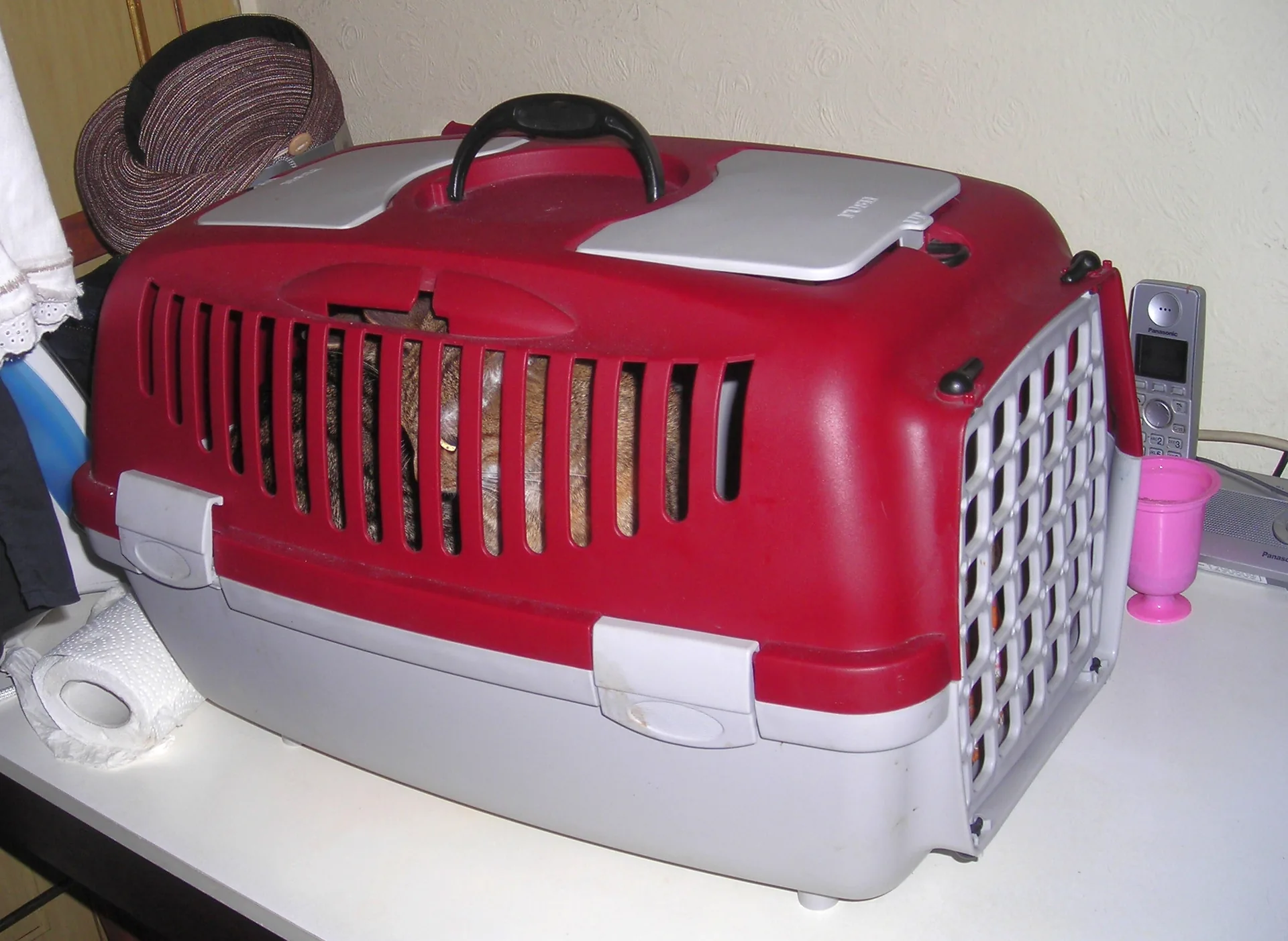
Send the airline the model, external dimensions, material, door and fastening photographs, and combined weight. The IATA’s cabin pet guidance explains that IATA does not certify or approve commercial carriers. A shop’s “IATA approved” label does not replace airline acceptance for your flight. Do not assume any soft bag is suitable for cabin travel.
Getting used to the crate and preparing for travel
The IATA’s pet transport guidance recommends familiarising animals with the container beforehand and allowing room for natural posture and turning. Leave the carrier open at home, then gradually introduce a closed door and short journeys. Discuss water, feeding and medication with your veterinarian for the full journey, including check-in and transit.
IATA discourages sedatives for transport because of potential adverse effects. Do not choose a drug or dose yourself. If medication is medically necessary, agree it with the veterinarian and airline. Avoid opening a carrier in an unfamiliar, noisy place without a safe plan: an airport escape makes both travel and recovery much harder.
Cost: a separate charge for each flight sector
The Vietnam Airlines cabin pet fee schedule lists domestic Vietnam Airlines cabin carriage at 5 000 000 VND per sector excluding VAT. The Vietnam Airlines checked pet fee schedule lists domestic checked carriage at 1 000 000 VND for a combined weight of up to and including 9 kg, also excluding VAT. These charges apply to Vietnam Airlines-operated flights; international travel is priced separately.
A price difference does not mean every pet is eligible for both modes. If cabin carriage is confirmed on two domestic sectors, the example is 5 000 000 × 2 = 10 000 000 VND before VAT. Do not treat one fee as covering the whole journey. Request a complete quote for every actual flight and refund conditions for cancellation or refused carriage.
Add the carrier, veterinary procedures, government paperwork, any agent, ground transport and accommodation conditions to your budget. Cargo needs its own quote: a checked-baggage fee is not a freight price. Treat a refundable rental deposit as cash needed upfront, separately from final expenses.
Arrival: collection, inspection and ground transport
Save carriage confirmations, animal quarantine contacts, your accommodation address and the meeting person’s phone offline. Keep original documents accessible in hand baggage. Before departure, establish where your pet is collected for its transport mode: passenger collection and a cargo terminal may involve different steps.
The vehicle must fit both the pet and the crate
When arranging your airport transfer, give the animal count, container dimensions and luggage. Request written confirmation of driver acceptance, a suitable vehicle, air conditioning and waiting conditions if processing is delayed. Do not assume an ordinary car booking automatically includes an animal.
Check your pet’s condition before leaving the airport. If concerned, contact a veterinarian rather than trying to solve a health problem through chat advice. If collection is delayed, establish the responsible service and holding location, and tell your accommodation that arrival will be later.
Housing: owner permission and building rules
A pet-friendly listing helps with searching but is insufficient for payment. Specify species, count, breed, weight, stay length and crate size. Obtain permission in the contract or a saved reply from an authorised owner. Separately establish whether building management permits animals.
Agree these conditions before paying a deposit
Ask for the pet fee, refundable deposit, final cleaning, damage responsibility and grounds for deductions. Clarify lifts, common areas, noise and dog walking rules. A verbal “a small cat is fine” does not confirm acceptance of two large dogs or permission to leave an animal unattended.
Inspect windows, balcony, ventilation and secure door closure. Confirmed temporary accommodation can cover the first days; then compare short and long-term rentals with your pet’s needs in mind. Do not pay a long-term deposit until both the flight and acceptance in the specific apartment are settled.
A nearby veterinarian and the next journey
Before moving in, save a nearby clinic’s details and ask about opening hours, communication language and out-of-hours care. For example, Paws International Clinic in Da Nang advertises pet import assistance. It is a contact for discussing procedural support, not the authority setting your route’s rules or proof of round-the-clock emergency care.
Share vaccination history, identification number and regular medication with the veterinarian. Plan separately for a return or third-country journey well ahead: successful entry into Vietnam does not establish readiness for the next border crossing. Keep documents and correspondence together so the history need not be reconstructed before another flight.
Six confirmations before departure
- The departure authority has confirmed export procedure, certificate form and deadlines.
- Vietnam’s animal quarantine authority has confirmed the import category and processing arrangements.
- Every operating airline has confirmed the animal, flight, transport mode and carrier.
- Transit is mapped: documentation, handover, collection and delay arrangements.
- Sector charges, transfer and cancellation terms are recorded; required funds are accessible.
- Housing accepts this specific pet, building rules are agreed and veterinary contacts are saved.
Flight agreed? Choose housing for the first weeks
Compare short and long-term rentals, then document pet permission and deposit conditions before payment.